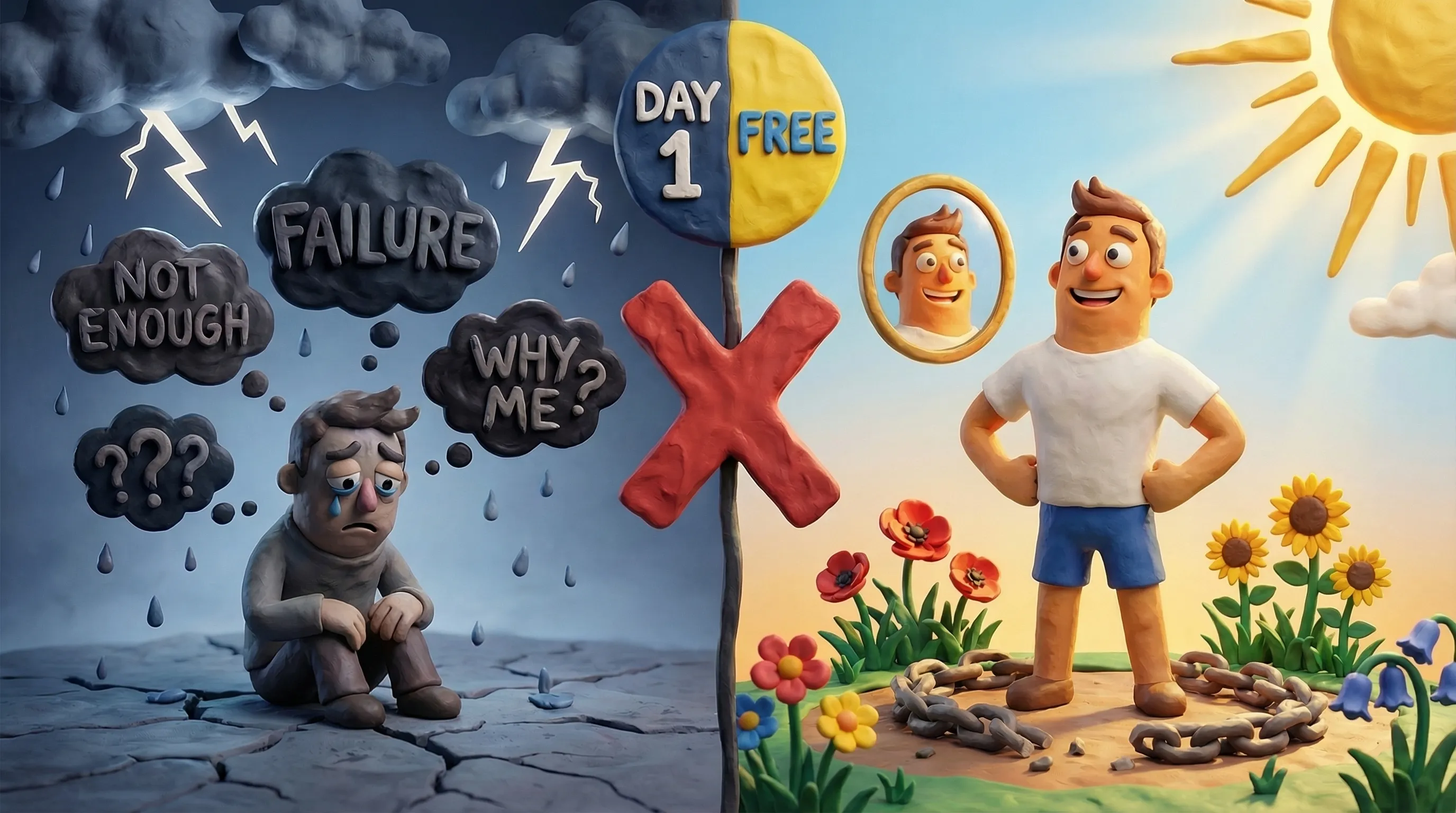
Self-criticism (self-edstvo) and rumination destroy more dreams than failure ever could. That inner voice saying "you're worthless" isn't truth—it's a habit. Here's how to kill it.
Why Your Brain Loves Self-Criticism
Evolution wired us for self-criticism as "protection." But modern brains turn it toxic: rumination (endless negative loops) activates amygdala (fear center), flooding you with cortisol. Result? Depression, anxiety, paralysis.
Harvard studies show chronic self-criticism shrinks prefrontal cortex (decision-making). Good news: neuroplasticity lets you rewire.
Self-Criticism vs Healthy Self-Reflection
| Toxic Self-Criticism | Healthy Self-Reflection | Impact |
|---|---|---|
| "I'm a total failure" | "That didn't work. What can I learn?" | Paralysis vs growth |
| Endless rumination loops | Specific problem-solving | Depression vs solutions |
| Global self-judgment | Behavior-focused feedback | Low self-worth vs improvement |
| Emotionally charged | Objective analysis | Stress vs clarity |
21-Day Protocol to End Self-Criticism
Week 1: Awareness Training
Catch the critic: Journal every negative thought. Label it: "There's the critic again." Don't argue—just notice.
Week 2: Reframe Toolkit
Replace attacks with questions:
- "I'm stupid" → "What skill do I need to learn?"
- "Everyone hates me" → "What evidence supports/opposes this?"
Week 3: Compassion Practice
Self-compassion break (Kristin Neff method):
- Acknowledge suffering: "This is hard"
- Common humanity: "Everyone struggles"
- Kindness: "May I be patient with myself"
Daily Habit: 3-minute loving-kindness meditation: "May I be safe. May I be happy."
Results After 21 Days
- 50% reduction in rumination (clinical studies)
- Improved focus, relationships, resilience
- Inner voice becomes coach, not bully
Stop self-criticism isn't self-indulgence. It's mental strength training.