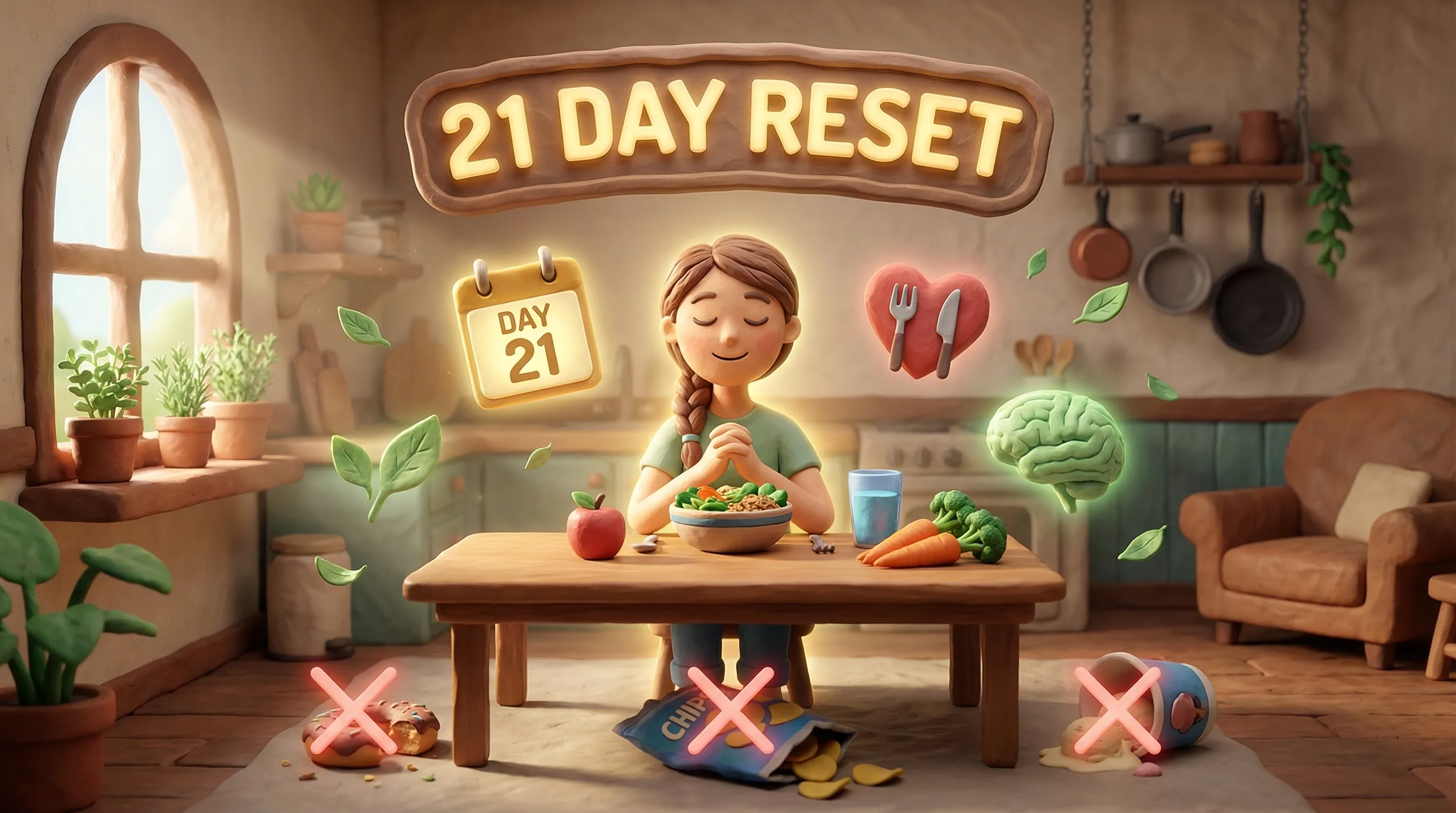
You're not weak. You're not broken. You're just stuck in a binge eating cycle that your nervous system learned to crave. Here's how to break it.
Why You Overeat (It's Not About Willpower)
Overeating isn't a food problem—it's an emotional regulation problem. You eat to:
- Numb stress
- Escape boredom
- Soothe anxiety
- Fill loneliness
- Punish yourself
Your brain learned: "Food = comfort." Now every emotion triggers eating.
The Overeating Consequences Timeline
| Timeline | Physical Changes | Mental Impact | Health Risk |
|---|---|---|---|
| 1-2 days of overeating | 1-3 kg water weight gain, bloating, fatigue | Guilt, shame, self-criticism | Low (temporary) |
| 3-5 days high-calorie diet | Fat accumulation begins, insulin resistance increases | Shame deepens, motivation drops | Moderate (metabolic shift) |
| 1-4 weeks chronic overeating | 2-5 kg fat gain, digestive issues, poor sleep | Depression, anxiety, isolation | High (chronic inflammation) |
| 3-6 months systematic overeating | Significant weight gain, metabolic damage, fatty liver | Identity shift ("I'm fat"), hopelessness | Very High (pre-diabetes risk) |
| Years of binge cycles | Obesity, type 2 diabetes, heart disease, stomach damage | Eating disorder, severe depression, suicidal ideation | Critical (life-threatening) |
The Psychological Root
Most binge eaters have a childhood story:
- "Clean your plate" mentality (wasting food = guilt)
- Using food as reward/punishment
- Emotional eating modeled by parents
- Food scarcity in childhood (now overeating for security)
Your brain still believes: "Eat everything now. It might disappear."
Your 21-Day Binge Eating Recovery
Days 1-7: Remove Triggers
Don't white-knuckle through. Remove binge foods from your home. Replace with healthier snacks. Meal prep so you're never desperate.
Days 8-14: Address Emotions
When you want to binge, pause. Ask: "What emotion am I trying to escape?" Sit with it for 5 minutes. Usually it passes.
Days 15-21: Rebuild Relationship with Food
Eat slowly. Taste food. Notice fullness cues. Practice stopping at 80% full (not stuffed).
The Shocking Shift
By day 21, something changes. Food loses its power. You're no longer fighting it—you're just eating normally. The cycle breaks.
Real Talk About Recovery
Overeating recovery isn't about restriction. It's about:
- Healing your nervous system (breathwork, sleep, exercise)
- Processing emotions (therapy, journaling, talking)
- Building new coping skills (walks, meditation, connection)
- Forgiving yourself (the shame is the real killer)
Overeating isn't a character flaw. It's a symptom of emotional pain. Heal the pain, the eating normalizes.