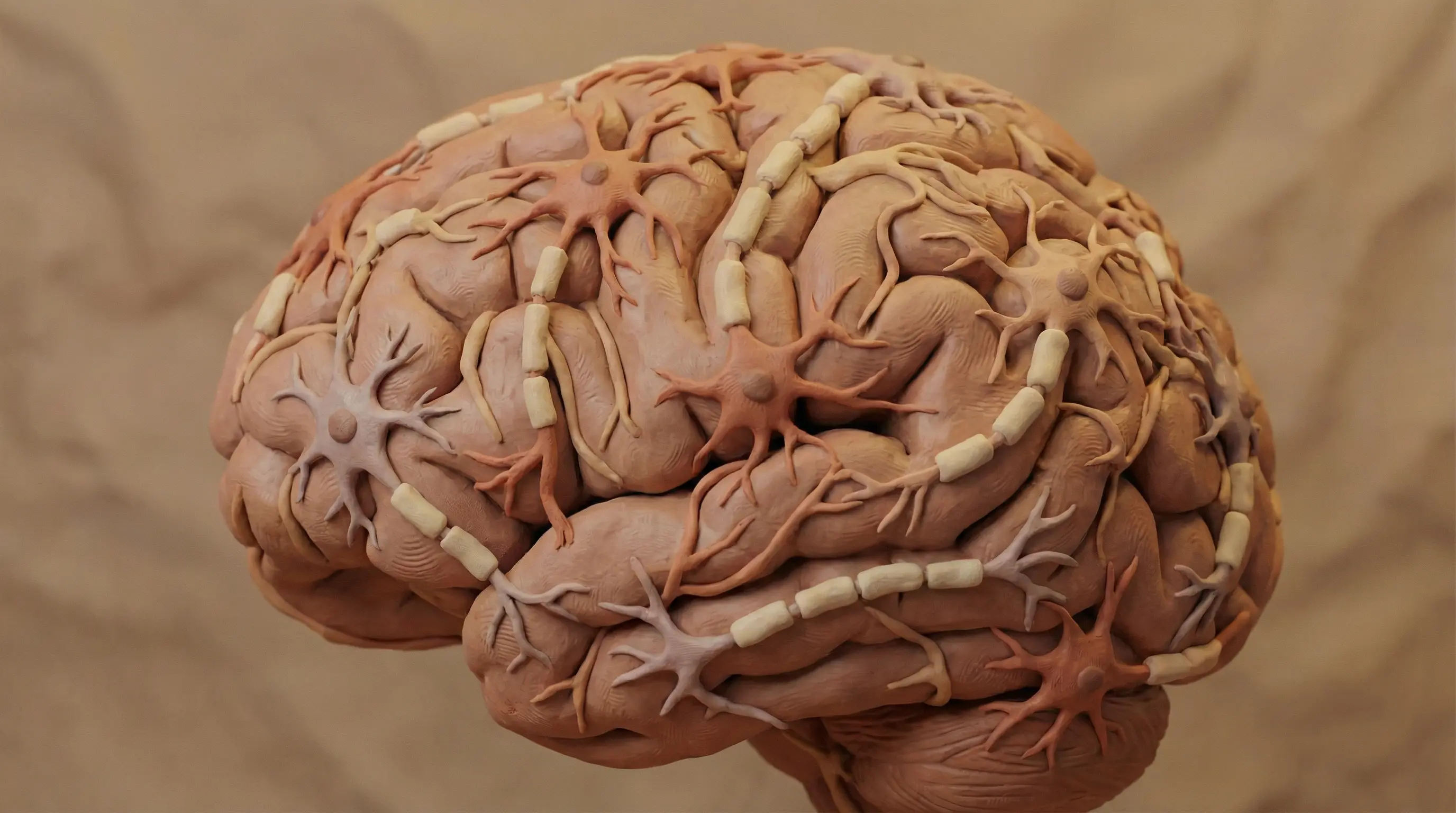
You’ve heard the term “brain rot” thrown around—usually when someone jokes about their scrolling habit. But it’s not just internet slang. There’s real neuroscience behind what happens when you spend hours doomscrolling through social media, and the changes are more significant than you might think.
What’s Actually Happening in Your Brain
When you scroll through your feed, your brain isn’t just passively consuming information. It’s undergoing measurable changes in how it processes information, makes decisions, and manages attention.
Every notification, every algorithm-tuned video, every outrage-inducing headline triggers a dopamine response designed to keep you scrolling. You get a tiny hit of “maybe this next thing will be important, funny, shocking, or useful” over and over again.
The problem starts with sustained cognitive overload.
- Your prefrontal cortex—the part responsible for critical thinking, decision-making, and emotional regulation—gets exhausted.
- You’re constantly switching between different pieces of information, emotions, and narratives.
- This rapid context-switching burns through mental energy at an alarming rate.
But there’s something even more concerning happening under the surface: your brain’s reward system is being recalibrated.
Constant exposure to algorithmically curated content designed to provoke strong emotions (usually negative ones, since outrage keeps you engaged) desensitizes you to normal, everyday stimuli.
Suddenly:
- A conversation with a friend feels boring.
- A book feels slow.
- Your own thoughts feel uninteresting.
Normal life can’t compete with the firehose of stimulation coming from your screen.
The Brain Rot Symptoms You’re Probably Already Experiencing
“Brain rot” isn’t a clinical diagnosis—it’s the lived experience of cognitive decline that comes from sustained doomscrolling.
You might recognize some of these signs:
- You can’t concentrate on a single task for more than a few minutes without reaching for your phone.
- You struggle to retain information you read, even if it feels important in the moment.
- You feel anxious about missing out—news, trends, crises, drama.
- You have trouble sleeping because your brain feels wired, not tired.
- You feel slower and duller than you used to—like your thinking is covered in fog.
The worst part? You’re often fully aware it’s happening, which just adds another layer of stress, guilt, and self-criticism.
How Long Does Recovery Take?
Here’s the good news: your brain is plastic. It can adapt and heal. But it doesn’t happen by accident—you have to give it space to recalibrate.
Think of recovery in four phases:
| Recovery Phase | Timeline | What Happens | Your Job |
|---|---|---|---|
| Digital Detox | Days 1–7 | Withdrawal, irritability, boredom, intense cravings to scroll | Endure discomfort without giving in |
| Recalibration | Days 8–21 | Brain stops craving constant stimulation, attention slowly grows | Engage with slower content and real activities |
| Restoration | Days 22–60 | Noticeable improvement in focus, better sleep, reduced anxiety | Maintain new habits, protect your progress |
| New Baseline | 60+ days | Reward system resets to a healthier level | Use social media intentionally, not impulsively |
You don’t need to be perfect, but you do need to be consistent.
The 7-Day Brain Rot Recovery Plan
Days 1–3: The Painful Truth
This is where you rip off the bandage.
- Delete social media apps from your phone.
(If you absolutely must use them, keep them on desktop only—the friction is intentional.) - Replace your scrolling time with something that demands active engagement: reading a physical book, writing, drawing, walking, or even just sitting with your thoughts.
Your brain will protest. You’ll feel antsy, restless, maybe even irritable or low. That’s not a sign you’re failing—that’s a sign of withdrawal from constant stimulation.
Let it happen. Don’t negotiate with “just five minutes” of scrolling. That five minutes is how the loop reassembles itself.
Days 4–7: The Boredom Phase
This is when most people quit.
Everything feels boring:
- Books feel slow.
- Conversations feel pointless.
- Movies feel too long.
- Silence feels unbearable.
This isn’t proof that life is boring—it’s proof that your brain has been running on artificially high stimulation. You’ve been using an IV drip of novelty.
What you’re noticing now is your nervous system coming down.
Your job during this phase is simple, but not easy:
- Do not replace social media with another high-stim activity (endless YouTube, gaming, constant streaming).
- Let boredom show up without instantly killing it with a screen.
- Keep choosing slower, grounded activities: reading, journaling, walking, cooking, workouts, talking to real people.
Boredom is not a problem to escape; it’s a detox symptom to move through.
Week 2 and Beyond: The Reset
By week two, something strange starts to happen: you become interested in things again.
- A conversation feels naturally engaging instead of something you half-listen to while scrolling.
- You can read more than a few paragraphs without your mind screaming for a hit of novelty.
- Sleep becomes deeper and more restful because your brain isn’t being bombarded right up until bedtime.
- Your baseline anxiety drops because you’re no longer mainlining every global crisis and personalized outrage thread.
These are not random side effects. This is your nervous system returning to a healthy operating range.
From this point on:
- Protect boundaries: keep social media off your phone or behind friction (blocked during certain hours, desktop-only, or time-limited).
- Default to creation over consumption: writing, building, learning, training.
- Notice when scrolling starts to feel “sticky” again—that’s your cue to step back.
Why This Is Different from “Just Taking a Break”
The reason most people fail at digital detoxes is because they treat them like a crash diet:
- Suffer for a short period.
- Feel a bit better.
- Go right back to what broke them.
That’s not a reset—that’s a loop.
What you’re doing here is not a temporary break. It’s a recalibration of your brain’s baseline expectation for stimulation.
After 60 days of living differently:
- You can use social media again—but you’ll be shocked by how cheap and loud it feels.
- Doomscrolling for an hour won’t be tolerable; it will feel obviously toxic and draining.
- You’ll see the manipulation in your feed rather than getting swept away by it.
You won’t be perfect, and you don’t need to be. The goal isn’t purity—it’s power. You want your attention, your focus, and your emotional state to serve you, not an ad-driven feed.
The Brain Rot Is Real—So Is Recovery
Your brain isn’t broken; it’s just adapted to what you’ve repeatedly asked of it.
Give it seven days of honest detox, a few weeks of slower living, and a couple of months of intentional choices—and it will adapt back.
You don’t have to earn that clarity. You just have to stop training your brain to live in constant, weaponized distraction.
Start today. Your future self will think more clearly, feel more grounded, and finally recognize how bad the old doomscrolling loop really was.